Comprehensive Guide to Destin Waterfront Condos & Boat Access
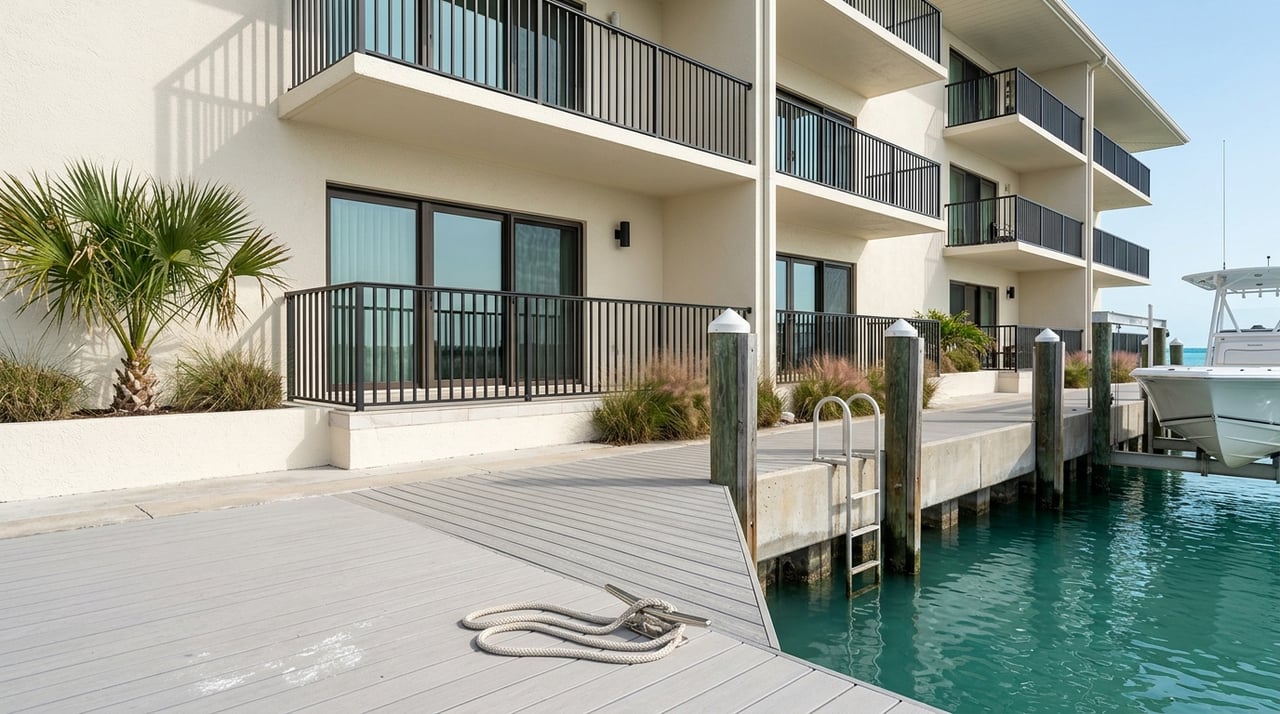
Wondering whether a Destin waterfront condo comes with a real boat slip, shared dock access, or just a nice view of the water? That question can change your ownership costs, your day-to-day use, and even your resale value. If you are buying a second home, vacation property, or investment condo in Destin, understanding HOA rules, dock rights, and building obligations can help you avoid expensive surprises. Let’s dive in.
Not every Destin waterfront community is structured the same way. Some properties are Florida condominiums governed by Chapter 718, while others are fee-simple communities with homeowners associations governed by Chapter 720. That difference matters because boat slips, parking spaces, patios, and dock areas may be handled very differently from one property to the next.
In a condominium, your unit includes an undivided interest in the common elements. The declaration may also create limited common elements, which are reserved for the use of specific units. In practical terms, that means a slip or dock space may be exclusive to your unit, shared under association rules, leased separately, or not guaranteed at all.
For a resale condo purchase in Florida, you are entitled to important records. These include the declaration, articles, bylaws, rules, annual financial statement, current budget, milestone summary if applicable, and the most recent structural integrity reserve study or a statement that none exists. Since December 31, 2024, condo contracts also require language about milestone inspections and structural integrity reserve studies, and buyers may have voidability or closing-extension rights if required materials are not delivered on time.
In Destin, marketing language can make waterfront access sound simple. Legally, the real answer is usually in the declaration and related association documents. If you care about keeping a boat at the property, you need to know whether the right is deeded, treated as a limited common element, or granted only as a revocable use right.
That distinction affects what transfers when you buy the unit. Florida condominium law says a unit owner’s share in the common elements cannot be separated from the unit, but the declaration can grant exclusive use of a limited common element and can also authorize transfer of that use right. In other words, some slip rights may follow the unit, while others may depend on separate rules or approvals.
Another issue in Destin waterfront ownership is where the dock actually sits. Some waterfront structures may extend over state-owned submerged lands rather than only private uplands. According to the Florida Department of Environmental Protection, sovereign submerged lands include waters and lands waterward of the ordinary or mean high-water line, and the state handles leases, easements, renewals, modifications, and assignments tied to those uses.
That matters because the dock structure itself may involve permits, state approvals, or use limitations beyond what the condo association says. If a slip or dock is important to your purchase, you will want to confirm whether the structure is on private uplands or over sovereign submerged lands and whether the necessary rights and permissions are in place.
Monthly condo dues in Destin waterfront buildings often cover much more than pool maintenance and landscaping. Depending on the declaration, dues may reflect insurance, exterior upkeep, elevators, docks, seawalls, and other shared building systems. The exact mix varies by property, which is why reviewing the budget line by line is so important.
For waterfront condos, shared systems can be more expensive to maintain over time. Salt-air exposure, exterior waterproofing, dock repairs, and storm-related wear can all affect operating costs and reserve planning. A lower monthly fee is not always better if it means the building is underprepared for future repairs.
Florida law requires condo budgets to include reserve accounts for capital expenditures and deferred maintenance. For budgets adopted on or after December 31, 2024, unit-owner-controlled associations that must obtain a structural integrity reserve study cannot vote to waive or underfund reserves for the required items. The law also warns that waiving reserves can expose owners to unanticipated special assessments.
For buyers, that means the reserve schedule is one of the most important documents in the file. You want to know how much the association has set aside, what components are being funded, and whether owners may still face additional costs for major repairs.
A structural integrity reserve study, often called a SIRS, focuses on major building components. Under Florida law, that includes the roof, structure, fire protection, plumbing, electrical systems, waterproofing and exterior painting, windows and exterior doors, plus other qualifying items above the statutory threshold that affect those components.
For residential condominium buildings that are three habitable stories or higher, the study must be updated at least every 10 years. Associations existing on or before July 1, 2022 and under unit-owner control had to complete the first study by December 31, 2025, with a final completion deadline of December 31, 2026.
Milestone inspections are separate from reserve studies. In Florida, buildings that are three habitable stories or more generally require a milestone inspection at 30 years and every 10 years after that. A local enforcement agency may require the first inspection at 25 years when local conditions, including proximity to salt water, justify it.
For Destin waterfront buyers, this is especially relevant. Saltwater exposure can affect building maintenance cycles, so you should ask whether the property has completed a milestone inspection, whether any repairs were recommended, and whether the association has shared the summary with owners.
Waterfront ownership in Destin also means paying close attention to flood risk and insurance structure. FEMA states that most homeowners policies do not cover flood damage, and flood coverage is separate. For condominiums, FEMA uses the Residential Condominium Building Association Policy for building coverage, while Florida’s consumer insurance guide explains that an HO-6 condo policy generally covers personal property, certain interior items not covered by the association policy, personal liability, and at least $2,000 of loss-assessment coverage.
That split matters because the association’s coverage and your individual coverage do not insure the same things. Florida’s guide also gives a waterfront example showing that if flood is excluded and a seawall is damaged by rising water or waves, an HO-6 policy would not cover the related assessment.
If you are comparing waterfront condos in Destin, local flood tools can give you much better context. Okaloosa County says its Flood Zone App and Forerunner property profiles can show a parcel’s flood zone, Base Flood Elevation, Design Flood Elevation, and compliance warnings. The county also identifies the Gulf of Mexico and Choctawhatchee Bay as major flooding sources.
These property profiles may also show Elevation Certificates and substantial-improvement history, which can be especially useful for older waterfront buildings. Even if a property is outside a high-risk flood area, FEMA notes that a lender can still require flood insurance.
Many Destin waterfront condo buyers also care about vacation rental flexibility. Here, the first rule is simple: do not assume. Rental rights are usually building-specific, and association rules can be just as important as county regulations.
Under Florida condominium law, when a unit is leased, the tenant receives use rights to association property and common elements generally available to unit owners unless those rights are waived in writing. The association may also adopt rules to prohibit dual use by owner and tenant.
Okaloosa County says any overnight rental under six months is a short-term rental, and that includes vacation rentals in condominiums. The county may regulate occupancy, registration, on-site posting, inspections, parking, solid waste, and evacuation-related rules. The county also says the tourist development tax applies to guests renting for six months or less.
DBPR states that a whole-unit vacation rental license is required when an entire condominium unit is rented more than three times in a calendar year for periods under 30 days or is advertised that way. If rental income matters to your purchase, review both the condo rules and the county requirements before you commit.
Two condos can both be called waterfront and still offer very different ownership experiences. One may have wide open-water exposure but no protected dock rights. Another may have more limited views but stronger recorded access to a slip or dock area.
In practice, view value is often building-specific and stack-specific. The declaration controls common elements and limited common elements, so what matters is not just the marketing photo, but whether the features you care about are actually protected by recorded rights.
Before you move forward on a waterfront condo in Destin, focus on the questions that affect ownership the most.
Buying the right waterfront condo is about much more than location and finishes. When you understand the documents, the dock rights, and the building’s financial picture, you can make a much more confident decision.
If you want experienced, high-touch guidance on Destin waterfront condos, HOA details, and boat-access questions, connect with Howard B Dolgoff for a complimentary consultation.
Stay up to date on the latest real estate trends.
Our team of professionals will be with you every step of the way, from preparing your home for the sale to handing the keys to the new buyer.