Buying Land in Santa Rosa Beach: What to Review First
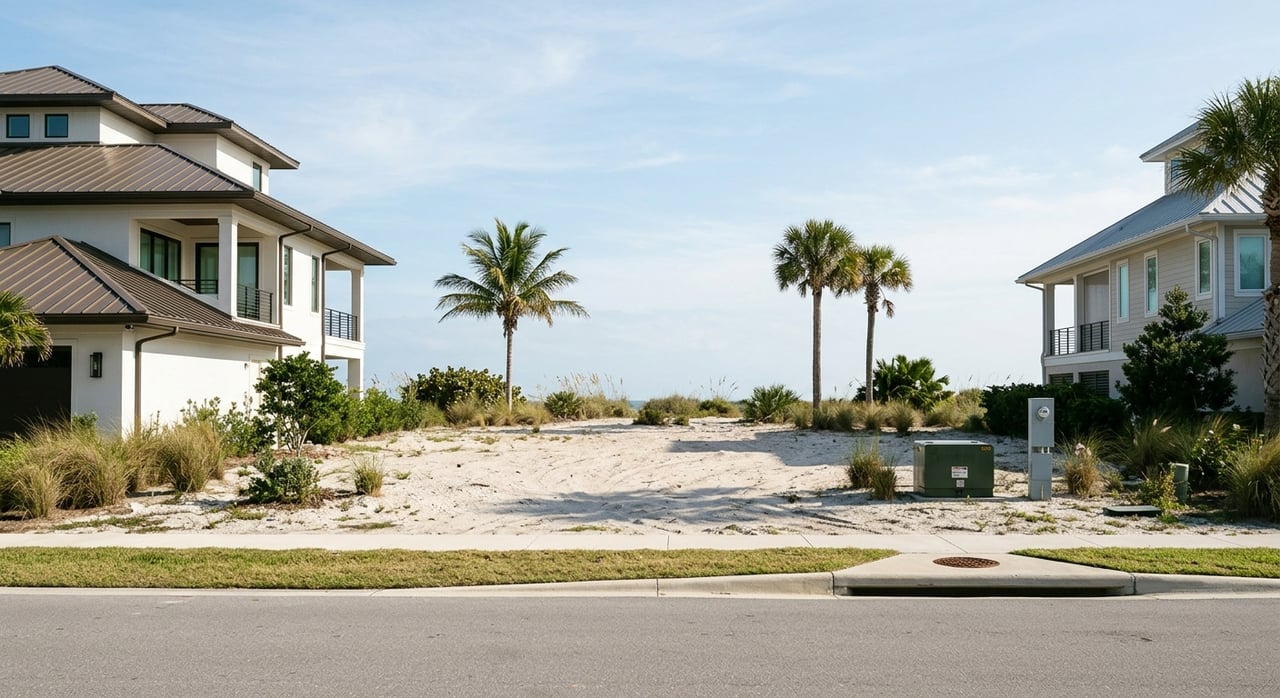
Buying land in Santa Rosa Beach can look simple at first glance. A listing may show a great location, a promising lot size, and a price that feels like an opportunity. But in this part of Walton County, the real question is not just what the parcel looks like on paper. It is whether you can actually build what you want under local rules, site conditions, and utility constraints. If you are considering a lot for a future home, second home, or investment, this guide will help you focus on the details that matter most before you make an offer. Let’s dive in.
Before you think about floor plans or future value, you need to confirm how Walton County classifies the parcel. The county allows buyers to identify zoning through its interactive map by searching the Parcel ID and turning on the zoning layer. You should also verify the future land use category, because both can shape what is allowed on the site.
Two lots that seem similar can have very different building potential. Walton County notes that some lots and developments have special requirements that can limit home size or even the type of foundation you can use. That means list photos and rough lot dimensions do not tell the full story.
In Santa Rosa Beach and nearby 30A areas, zoning may only be part of the picture. Walton County’s official zoning map shows neighborhood-plan overlays in places such as Blue Mountain Beach, Gulf Pines, Gulf Trace, Point Washington, Grayton Beach, and Inlet Beach. These overlays can add standards for setbacks, density, access, or design.
If a lot falls inside a neighborhood plan, PUD, or another overlay district, your building options may change. This is one reason out-of-market buyers often benefit from a more detailed review before moving forward.
Before you commit to a land purchase, confirm these basics with county records and local due diligence:
In Santa Rosa Beach, flood status is one of the biggest factors in land buying. Walton County points buyers to FEMA flood resources and county flood tools for verification. If a parcel is in a special flood hazard area, the county requires a development order before development and a building permit before construction begins.
Flood zone details can affect both cost and design. In AE zones, the finished floor must be at least 1 foot above base flood elevation. In VE and Coastal A zones, the lowest horizontal structural member must be at least 1 foot above base flood elevation. In A zones without a base flood elevation, the finished floor must be 3 feet above the highest adjacent grade.
Floodway properties are more restrictive. Walton County states that fill is prohibited, enclosures below base flood elevation are not allowed, and any encroachment requires a licensed engineer’s no-rise evaluation. The county also requires elevation certificates at three stages during construction.
For a buyer, this means a lot may be buildable but still come with a more complex and expensive path. If floodplain issues are present, your design, engineering, and timeline may all be affected.
Many buyers assume they can clear a lot soon after closing. In South Walton, that can be a costly mistake. Walton County says that if a parcel is south of the Choctawhatchee Bay, a building permit or development order is required before land clearing or alteration, with limited exceptions.
The county also identifies protected areas that may affect what can be removed or disturbed. These can include native vegetation communities, coastal dune lake protection zones, a 25-foot wetland buffer, and a 50-foot buffer from the mean high-water line of the bay, basins, bayous, or tributaries.
Walton County is home to 15 named coastal dune lakes, and these areas deserve extra attention during due diligence. The county specifically warns buyers to call before removing trees or vegetation near these lakes, because fines and added permitting costs can apply.
Some coastal parcels may also fall within Choctawhatchee beach mouse habitat zones. Walton County notes that Tier 1 parcels require coordination with the U.S. Fish and Wildlife Service before development, while Tier 2 parcels must meet conservation measures and wildlife-lighting review. Coastal barrier areas such as Moreno Point, Four Mile Village, Deer Lake, Draper Lake, and Grayton Beach also deserve careful review because flood insurance may be restricted for certain post-designation structures.
A parcel may look ideal on a map and still be impractical if utility service is uncertain. Walton County’s utility directory lists Regional Utilities in Santa Rosa Beach and South Walton Utility Company in Miramar Beach, along with electric providers CHELCO and FPL. In South Walton County, Regional Utilities states that it is the franchised water and wastewater provider.
This is important because utility service is not uniform across the area. Regional Utilities also notes that low-pressure force-main areas require individual grinder pumps. A Letter of Availability and a Utility Map Request can be useful tools when you are trying to confirm what service is actually available to a specific parcel.
Before closing, you should confirm whether the lot will connect to public sewer or need septic approval and site evaluation. Starting January 2, 2025, the Florida Department of Environmental Protection manages septic system permitting in Walton County.
That makes this a key part of early due diligence, especially for buyers purchasing from out of town. A parcel without easy sewer access may still work, but the path forward can be different than expected.
Utility service is only one part of practicality. You also need to know how the lot is accessed. Walton County requires driveway permits for any connection, replacement, or repair to driveways that connect to a county facility, and new construction uses the residential driveway application in the building-permit packet.
If the parcel has been split, access becomes even more important. Walton County says new lots created through lot splits must front public or private streets, and the county notes that the absence of public or private streets can complicate approval.
Online maps are useful for screening, but they are not the final word. Walton County’s GIS and address-verification materials state that the data is approximate and not a legal representation. The county also notes that GIS staff do not address vacant parcels.
In practical terms, that means you should treat a survey, title review, and public-record review as essential. Easements, setbacks, recorded restrictions, and boundary questions need to be verified through the proper documents, not just a map view.
If you are buying land in Santa Rosa Beach from out of market, the best approach is to move in a clear sequence. Walton County says the first step for most development applications is a pre-application meeting request through EnerGov, and applications are not accepted before that meeting. The county also says planning review typically takes about 2 to 3 weeks and continues through the final permit or certificate of occupancy.
That local process gives buyers a helpful framework for evaluating land before they close. Instead of assuming a lot is ready for your vision, work backward from what the county will need to approve.
Use this checklist as a starting point when comparing lots in Santa Rosa Beach:
For many buyers, especially those purchasing a future coastal home from another city or state, the biggest risk is not just paying too much for land. It is buying a parcel that is legal to own but slower, more expensive, or more limited to build on than expected.
That is why local guidance matters. In a market like Santa Rosa Beach, the right lot is not simply the one with the best asking price. It is the one that fits your goals, your timeline, and the county’s rules with as few surprises as possible.
If you are weighing land opportunities along 30A or anywhere in Santa Rosa Beach, working with a local, land-savvy broker can help you ask the right questions early and avoid expensive missteps later. When you are ready for tailored guidance, connect with Howard B Dolgoff for a complimentary consultation.
Stay up to date on the latest real estate trends.
Our team of professionals will be with you every step of the way, from preparing your home for the sale to handing the keys to the new buyer.