Destin Condo SIRS and Special Assessments Explained
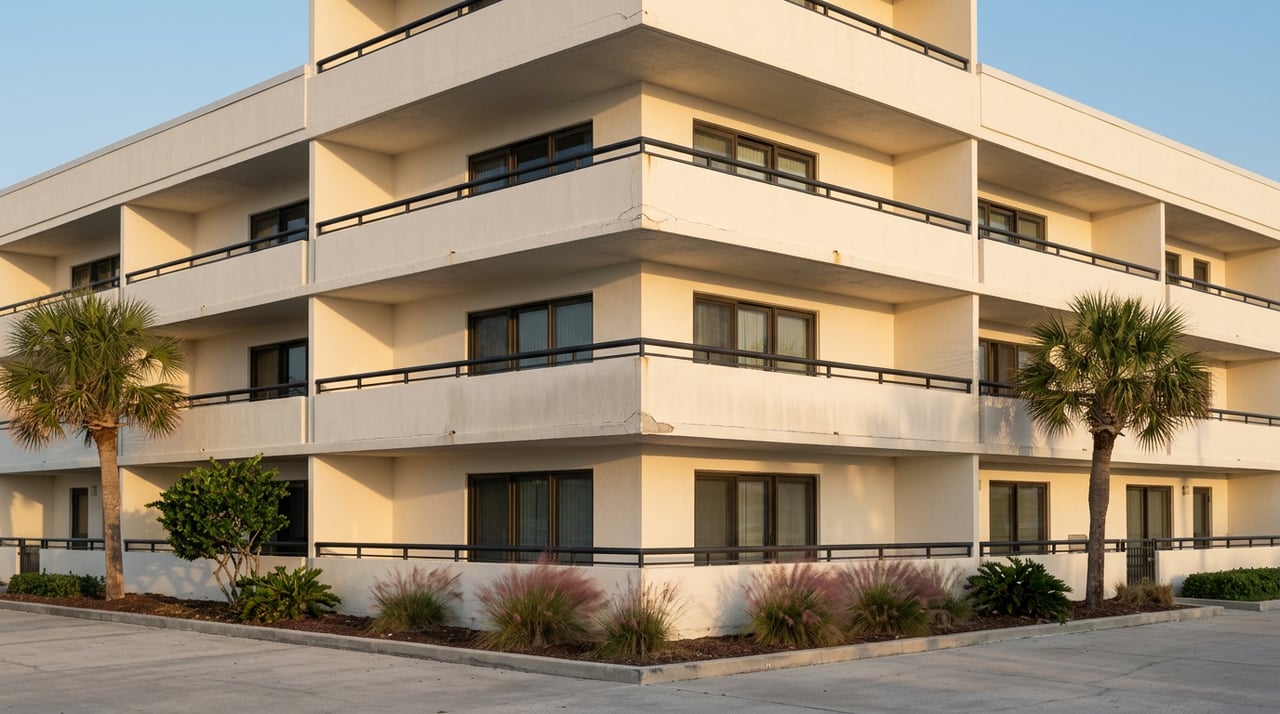
Ask most buyers touring Destin condos what worries them about an older building, and they will say the same thing: age. A tower from the 1970s feels riskier than one from the 2000s, so the instinct is to chase newer construction and treat anything built before 1990 as a problem to be priced around.
That instinct is now the wrong question. Florida's post-Surfside condo laws did not create a sliding scale where older buildings carry more risk and newer ones carry less. They created a hard line between buildings whose associations have done the paperwork and buildings that haven't, and that line runs straight through Destin's beachfront corridor regardless of when the concrete was poured. A tower from the early 1970s that has already completed its structural work can be a safer purchase in 2026 than a newer building whose board is still catching up. Knowing which side of that line a specific building sits on matters more right now than the year on its certificate of occupancy.
Gulf Shore Drive and the Highway 98 corridor through Destin were built out fast in the 1970s and 1980s, and that construction wave is the reason so much of the city's original condo inventory is now well past the age threshold that triggers Florida's structural review.
| Building | Year Built |
|---|---|
| Sandpiper Cove | 1973 |
| Shoreline Towers | 1972 |
| Jetty East | 1975 |
| Aegean | 1977 |
| Holiday Surf and Racquet Club | 1978 |
| Destin on the Gulf | 1982 |
| Breaker's East | 1982 |
| Inlet Reef Club | 1983 |
| Islander | 1984 |
| Sundestin | 1984 |
| Emerald Towers | 1984 |
| Grand Mariner | 1984 |
| Waterview Towers | 1986 |
Florida law requires a milestone structural inspection once a condominium or cooperative building three stories or taller reaches 30 years of age, or as early as 25 years if it sits within three miles of the coast and the local building official chooses to enforce that earlier timeline. It hardly matters which threshold applies to a given Destin building at this point. Every building on that list cleared 30 years ago. The debate over the 25 year rule versus the 30 year rule, which shows up constantly in state level coverage of this law, is close to irrelevant on Holiday Isle. The relevant question for a building this age isn't whether it must comply. It's whether it already has.
One detail buyers commonly miss: a building's age for this purpose is measured from its certificate of occupancy date, not from when the association was formed or last renovated. A tower that swapped its name or underwent a full interior refresh in 2015 is still counted from its original CO.
Florida passed its structural integrity reforms in stages after the 2021 collapse of Champlain Towers South in Surfside, and for a few years the deadlines kept moving. That grace period ended this year. Associations existing before July 2022 were required to complete a Structural Integrity Reserve Study, the engineering and financial report known as a SIRS, by December 31, 2025, unless they paired it with a milestone inspection due by the end of 2026. As of January 1, 2026, funding for the eight structural components a SIRS covers, things like roof, load bearing walls, waterproofing, and fire protection, can no longer be waived or reduced by a unit owner vote. One industry guide summed up the moment bluntly, calling 2026 the year the bill came due for Florida condo owners, and that framing fits Destin as well as anywhere in the state. The Florida Department of Business and Professional Regulation confirms the same funding start date directly: associations had to begin funding SIRS reserves in accordance with the study on January 1, 2026, full stop, no more voting it away.
This is not an abstraction for Destin specifically. Shoreline Towers, the Holiday Isle high rise that dates to the early 1970s, already went through one of the larger special assessments seen anywhere on the Emerald Coast, roughly $70,000 per unit, to fund a structural renovation completed in 2022 and 2023. The building absorbed the hit and came out the other side with the work done. That is what compliance actually looks like on the ground: not a hypothetical future cost, but a specific number a specific association already collected and spent.
Age is not a reliable predictor of which buildings still owe that bill. Silver Shells, a considerably newer and higher end Destin resort community, still had an unfunded projects list and reserve study proposals on its own board agenda in December 2024. A 1970s tower and a 2000s resort can land on opposite sides of the compliance line from what their construction dates would suggest.
Here is the part that changes how a buyer should actually shop, and it has nothing to do with concrete. Fannie Mae has run a limited review process for years that let lenders finance condo units in buildings without putting the entire association through a full project review, provided the building's reserves cleared a minimum threshold. That threshold sits at 10 percent of the budget in 2026 and is scheduled to rise to 15 percent in January 2027. Fannie Mae eliminated the limited review pathway effective August 2026, and the cutoff to submit a mortgage application under the old rules for a building below the reserve threshold was August 3, 2026.
That date has already passed. Any Destin condo building that was under-reserved and did not have a qualifying mortgage application in the pipeline before August 3 now sits on the harder side of Fannie Mae's process. Buyers who need a conventional loan in that building are not necessarily locked out, but they are routed toward non-QM or portfolio lenders, typically at rates half a point to a point and a half above what a warrantable building would carry, with larger down payments to match. Buyers who assumed a mortgage would simply be available, because the unit looked fine and the price was right, are the ones who find out the hard way, usually after they are already under contract.
Insurance is moving in the same direction. Carriers, including Citizens, are increasingly declining to issue or renew policies for buildings without a completed SIRS and milestone inspection on file, which means a building's paperwork status now touches financing, insurability, and resale value all at once, not as three separate risks but as one.
For a buyer, the practical shift is simple to state and easy to skip if no one flags it: request the building's most recent SIRS and milestone inspection before writing an offer, not during due diligence after the contract is signed. Florida law gives buyers a window to cancel after receiving the association's required documents, generally three business days if the documents were delivered before signing and up to 15 days if they weren't, but that window is meant as a safety net, not a substitute for asking the right question up front.
Before making an offer on a Destin condo, ask for:
For sellers, the lesson from Silver Shells is worth sitting with. Getting ahead of a reserve shortfall, putting it on the board agenda, commissioning the study, showing a funding plan, is what keeps a building financeable and keeps buyers from walking at the eleventh hour. A seller whose association has already done that work has a genuine story to tell. A seller whose association hasn't should expect the conversation to come up regardless.
Does this apply to single family homes in Destin, not just condos? No. The SIRS and milestone inspection requirements apply to condominium and cooperative associations under Florida's Chapter 718, buildings three or more habitable stories tall. Single family homes and townhome HOAs fall under a different chapter and are not subject to this mandate, though many are raising reserves in response to the same cost pressures.
If a building already had its milestone inspection years ago, is it done? Not permanently. Milestone inspections repeat every 10 years, and a SIRS must be updated on the same 10 year cycle. A clean report from 2019 does not carry a building through 2029 without another look.
Does a completed SIRS guarantee no special assessment? No, but it changes the shape of the risk. A funded reserve means planned costs get paid out of savings that owners already built up. An unfunded one means the same costs arrive as a lump sum bill with much less warning.
If you're weighing a Destin condo purchase or wondering where your own building stands heading into the next inspection cycle, Emerald Coast Properties has spent more than two decades reading these documents before they become problems. Schedule Your Complimentary Consultation and we'll walk through what a specific building's paperwork actually says before you write an offer, or before you list.
Stay up to date on the latest real estate trends.
Our team of professionals will be with you every step of the way, from preparing your home for the sale to handing the keys to the new buyer.